Assurance Beyond the Certificate: How a Board Governs Fixed Electrical Testing
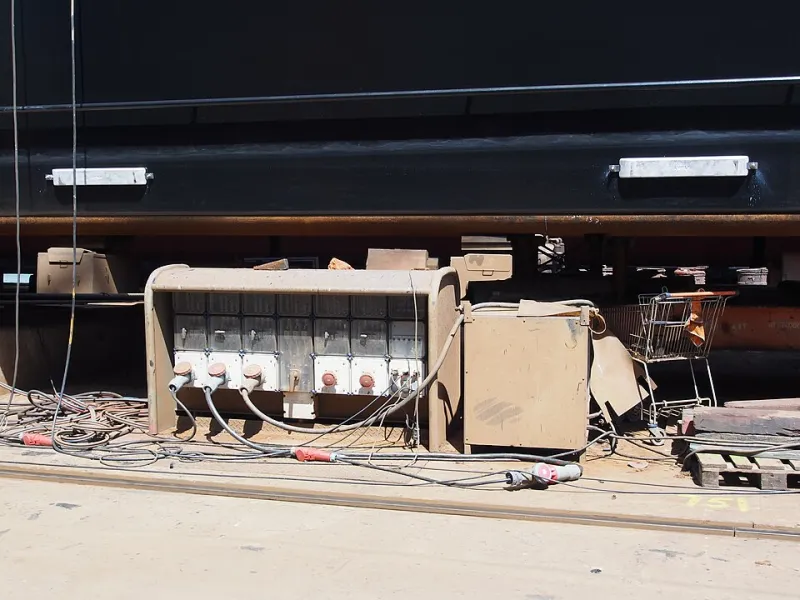
Photo: Alf van Beem, CC0, via Wikimedia Commons
The report is evidence of a process, not the process itself
For many UK SMEs, the Electrical Installation Condition Report, commonly called an EICR, arrives every five years, is placed in a folder and is not seen again until the next renewal falls due. That approach confuses possession of a certificate with control of an electrical installation. Directors do not need to test circuits themselves, but they do need to know that testing is planned, that findings are understood, that remedial work is commissioned and that closure is recorded. The board's interest is not the piece of paper; it is the assurance loop behind it.
Fixed electrical installations deteriorate through use, alteration and age. A report captures a point in time. Governance ensures that the point in time is acted upon. For an owner-managed company with several premises, the difference between a filed EICR and a managed EICR is the difference between hoping the estate is safe and being able to demonstrate that reasonable steps were taken.
Scheduling and budgeting for 2026
The recommended interval for periodic inspection and testing of commercial installations is generally five years, although the competent person may recommend a shorter cycle according to the installation's condition and use. This means that 2026 is a renewal year for many premises last tested in 2021. If the board has not yet seen a schedule of test dates, remedial deadlines and budget provisions, the omission should be corrected at the next meeting.
The testing fee is only one part of the cost. Directors should budget for access arrangements, out-of-hours attendance where isolation would disrupt trading, follow-up investigations and a realistic remedial reserve. A useful board paper separates the inspection cost from the expected cost of remedying typical findings, even if the latter is an estimate. It is also prudent to record who will authorise urgent works if a C1 observation is identified during the visit.
A multi-site estate needs one register rather than a collection of site folders. At minimum, the register should show each property, the date of the last inspection, the next due date, the contractor instructed, the overall assessment, the number of observations by category and the status of remedial actions. That single view allows directors to see where testing is overdue and where remediation has stalled.
Reading the codes: C1, C2 and FI
An EICR uses standard classification codes. C1 denotes danger present, with a risk of injury and immediate remedial action required. C2 denotes a potentially dangerous condition, requiring urgent remedial action. FI means further investigation is needed without delay because the inspection has identified a matter that cannot be fully assessed. C3 denotes improvement recommended and does not, by itself, make the report unsatisfactory. An installation is normally assessed as unsatisfactory where C1, C2 or FI observations are recorded.
The board does not need to interpret every observation, but it should require a clear explanation of the most serious ones. A C1 should trigger an immediate isolation or make-safe decision by the responsible person, followed by a report to the board. A C2 should have a dated remedial action and an owner. An FI should have a defined investigation scope and a deadline, not an open-ended note. C3 observations belong in the maintenance plan and should be reviewed for budgeting rather than ignored.
Directors should be alert to reports that contain extensive technical language but no prioritised action schedule. The question to ask is not whether the installation is old, but what the competent person has classified, what needs to happen next, who will do it and by when.
Commissioning remedial works without drift
Remedial work should be instructed through the same disciplines as any other property spend. The board should approve a scope, obtain a competent contractor's quotation and record the authorisation. For urgent C1 matters, the decision may be taken under a pre-agreed emergency authority, but it should still be reported and minuted. For C2 and FI matters, a works tracker should show the action, the responsible person, the target date and the evidence expected on completion.
Completion evidence matters. Depending on the work, it may include a minor electrical installation works certificate, an updated test schedule, photographs, an invoice and a signed confirmation that the observation has been addressed. A contractor's email saying the job is done is weaker evidence than a document that can be matched to the original observation. Where remedial work changes the installation, the next inspection cycle should also be reviewed.
Closing the loop across a multi-site estate
For SMEs with more than one property, closure is usually where governance weakens. A site manager may hold the certificate, the finance team may hold the invoice and the board may hold neither. The remedy is a simple monthly or quarterly routine: the premises register is updated, overdue actions are escalated, and completed actions are evidenced in the board pack. The report itself can then be filed with confidence because its findings have been tracked to conclusion.
A concise board minute should record the date of the latest EICR, the overall assessment, the number and category of observations, the remedial plan and the date of the next review. That minute is useful not only for internal control but also for insurers, prospective buyers and any future due diligence. It shows that the company treated electrical safety as a management matter.
A board-level routine
Fixed electrical testing is not an administrative event that happens once every five years. It is a cycle of inspection, classification, remediation and verification. The board's role is to keep that cycle visible. In 2026, directors should confirm that every relevant premises has a current or scheduled EICR, that the remedial reserve is funded, that C1 and C2 findings have named owners and that closure evidence is being collected. The certificate can then sit in the filing cabinet, but the assurance should sit in the board pack.