Desks, Rooms and Reality: Measuring How Your Office Is Really Used
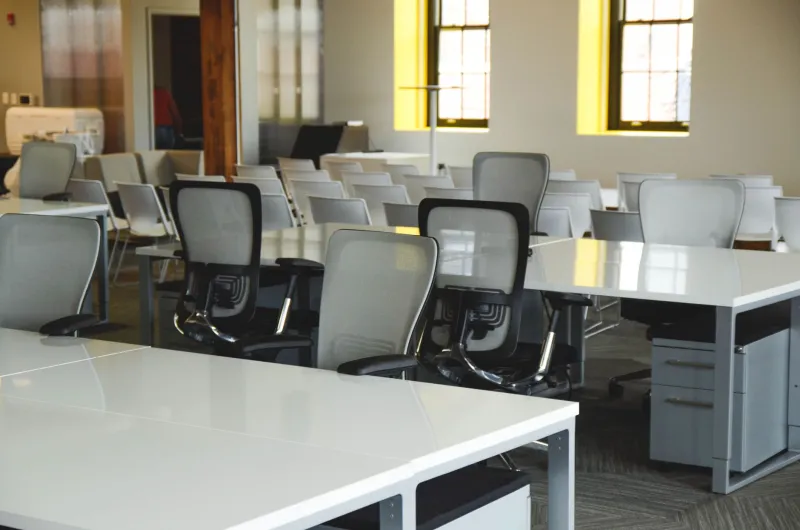
Most SME tenants do not have an office problem; they have an evidence problem. The workplace feels busy on a Tuesday, empty on a Friday, and impossible to judge from anecdote. Before the next lease event, budget round or board discussion, it is worth replacing impressions with a short, defensible utilisation audit.
Start with utilisation, not occupancy
Occupancy asks whether a desk, room or storage unit is allocated. Utilisation asks whether it is actually used. The distinction matters because an SME can be fully occupied on paper and half-used in practice. A team may hold twelve desks for eight regular attendees, or book three meeting rooms for one weekly call.
The board question is not whether the office looks full. It is whether the space is earning its rent, service charge, rates and management attention. A four-week audit gives directors a reasonable basis for that judgment without pretending to be a workplace consultancy.
A four-week audit you can run without a consultant
Choose a typical month, avoiding the week between Christmas and New Year, the main summer holiday fortnight and any office move. If the business has a hybrid pattern, measure a period that reflects it. The aim is a repeatable sample, not a perfect census.
Use three manual sweeps each working day at 10:00, 14:00 and 16:00. A nominated person walks the floor and records whether each desk is in use, whether meeting rooms are occupied, and how many people are present. For meeting rooms, compare actual occupancy with the booking diary. For storage, record the number of cabinets, shelves and floor areas in use and note obvious underuse.
Badge data can help, but treat it with care. It shows entry, not presence, and may not capture visitors or people who tailgate. Sensor data is useful where already installed; do not buy technology for a one-month exercise unless the lease decision is large enough to justify it.
A simple template is enough:
| Measure | How to capture it | What to watch |
|---|---|---|
| Desk utilisation | In-use desks divided by available desks at each sweep | Average and peak figures |
| Meeting-room utilisation | Actual occupancy against booked hours | Rooms booked but empty |
| Room-size demand | Which rooms are used for which meetings | Large rooms used by two people |
| Storage utilisation | Cabinets, shelves and floor space in use | Storage occupying prime desk area |
| Quiet-work demand | People using focus space or working elsewhere | Lack of suitable space |
| Peak attendance | Day-by-day headcount | Tuesday-to-Thursday concentration |
Record the raw figures in a spreadsheet and keep the sweep sheets. The audit should be auditable itself.
What the numbers tend to show
Small businesses often find that average desk utilisation is lower than expected, while peak-day pressure is concentrated. That pattern suggests reshaping rather than simply cutting. If average desk use is under half and peak use is below two-thirds, a smaller core with flexible meeting space may be more honest than a fixed floor of assigned desks.
Meeting rooms are frequently the most misread asset. A room can be booked all day and used for two hours. If that is the pattern, the answer may be booking rules, shorter default slots or a room-booking system rather than fewer rooms.
Storage is the quiet occupier. Files, stock, archive boxes and legacy equipment can absorb space that would otherwise support fee-earning work. Count it before assuming the desk area is the problem.
From evidence to board decision
Bring the audit to the board as a one-page summary: average and peak desk use, meeting-room use, storage use, cost per usable desk and the main exceptions. Then frame four options.
First, renegotiate. If the lease has a rent review or renewal approaching, utilisation evidence can support a discussion about terms, incentives or a reduced demise. Second, downsize. This is the clearest option where utilisation is persistently low and the lease permits a partial exit or break. Third, sublet or share. This can bridge a surplus period, but it depends on alienation provisions and the landlord's consent. Fourth, reshape. This may mean fewer assigned desks, more collaboration space, better storage and clearer hybrid rules.
The decision should consider cost per desk and cost per used desk. A cheap building that is half-used may be more expensive per productive seat than a smaller, better-configured floor.
Test the lease before you act
Utilisation evidence is only one input. Before committing to a downsizing or subletting plan, test the property and governance implications.
- Lease: check break dates, notice periods, rent-review mechanics, assignment and subletting clauses, and any reinstatement obligations.
- Service charge: confirm how the apportionment is calculated and whether a smaller demise would change it. Do not assume savings follow immediately.
- Business rates: take advice on the rating position before vacating or subletting part of the premises. Empty-property treatment and rateable values are not matters for guesswork.
- Dilapidations: if the plan involves alterations, removals or a later exit, check the repair and reinstatement covenants. A reshaping project can create liability if it is not documented.
- Consent: identify whether landlord consent is needed for sharing, subletting, alterations or signage.
A pre-decision checklist
- Has the audit covered a typical four-week period?
- Are average and peak utilisation reported separately?
- Have meeting rooms been tested against actual use, not bookings?
- Has storage been counted as occupied space?
- Is the cost per used desk known?
- Have lease, service charge, rates and dilapidations implications been reviewed?
- Has the board recorded the decision and the evidence behind it?
The output is not a verdict on the office. It is a board-level record that the space decision was made on measured use rather than habit. That is usually the difference between a property strategy and an expensive assumption.