From Skip to Sign-Off: Documenting Commercial Waste Across an SME Estate
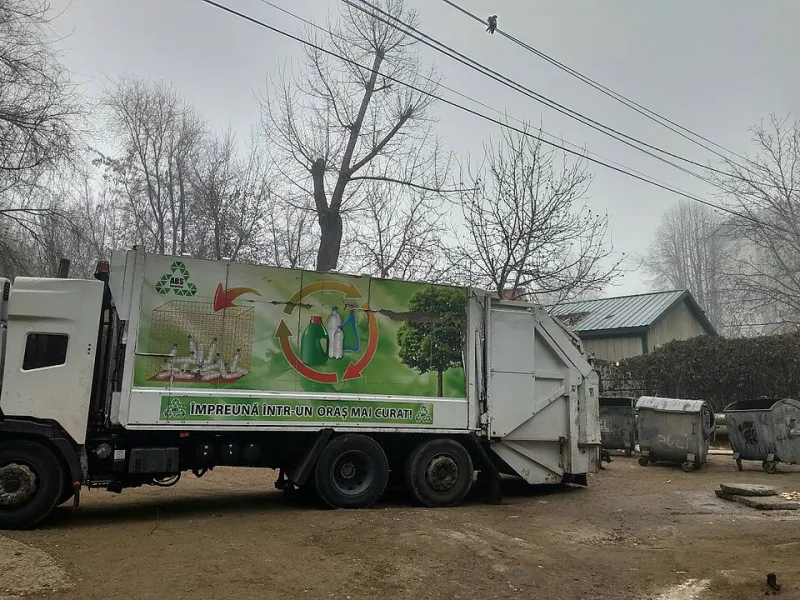
Photo: Gikü, CC0, via Wikimedia Commons
For many UK SMEs, waste sits at the edge of the operational picture. A contractor collects it, finance pays the invoice, and the board sees a modest line in the management accounts. That arrangement works until it does not: a contamination charge appears, a transfer note cannot be found, or a carrier turns out not to be registered. The obligations themselves are not new, but the expectations around them have tightened.
The rules that actually bite in 2026
The duty of care under section 34 of the Environmental Protection Act 1990 remains the anchor. In practical terms, an occupier must store waste safely, transfer it only to an authorised person, and keep an accurate written description of what is being moved. The paper trail is not administrative decoration; it is the evidence that the premises are being run properly.
Alongside that, the Simpler Recycling reforms in England require workplaces with ten or more full-time equivalent employees to separate dry recyclables and food waste. Those rules took effect for larger workplaces in 2025, with smaller firms following later, so by 2026 many SMEs are squarely in scope. In parallel, the digital waste tracking service is being phased in, and the direction of travel is clear: waste movements will be recorded and checked more closely than they were when a carbon-copy pad was enough.
The point for a board is not to memorise the regulations. It is to be satisfied that someone in the business can demonstrate compliance without a scramble.
Where accountability leaks
Waste rarely has a natural home in a small company. The facilities lead orders the bins. Finance pays the contractor. The property manager deals with landlord rules about bin stores and access. The board sees none of it until something goes wrong. The result is a quiet gap between three functions, each assuming another is watching.
That gap tends to show up in predictable ways: containers that no longer match the waste streams the business produces; collection frequencies agreed years ago and never revisited; contamination charges accepted without scrutiny; and transfer notes held in a drawer, a shared inbox or nowhere at all.
A four-part review
A useful review does not require a consultant or a lengthy project. It requires a named owner, a site walk and an afternoon with the contract file.
1. The carrier and the contract. Confirm that the carrier appears on the Environment Agency's public register of waste carriers, brokers and dealers, and keep a dated screenshot or printout. Check that the contract lists the waste types the business actually produces, the collection schedule, the contamination rules and the notice period. A contract that has not been reviewed since the bins were first ordered is a common finding.
2. The containers and segregation. Walk the bin store. Do the containers match the streams the business generates? Are internal bins and signage consistent with what the contractor expects? If staff are putting food waste into general waste because the kitchen bin is the only one available, the failure is operational, not moral.
3. The paper trail. Gather the last twelve to twenty-four months of waste transfer notes, hazardous waste consignment notes where relevant, and invoices. Check that dates, waste descriptions and carrier details line up. If notes are missing, treat that as a finding rather than a filing inconvenience.
4. The site walk. Observe the bins on a normal working day, not the day after a deep clean. Ask cleaners and facilities staff what actually happens. Contamination usually has a practical cause: a missing bin, a confusing label, a collection time that clashes with kitchen closing.
Turning the review into board evidence
A single-page waste register is usually enough. It should record the carrier, registration number, waste streams, collection frequency, contract end date, contamination charges in the last twelve months, and where the evidence is held. That page can sit alongside the premises compliance register rather than in a separate folder.
The register should have an owner: typically the operations director or the facilities lead, with finance confirming that invoices match the contracted service. A quarterly check is sufficient for most SMEs, with an annual review of the contract and the carrier's registration.
If transfer notes cannot be produced on request, that is not a filing problem. It is a control failure, and it should be escalated in the same way as a missing fire risk assessment or an expired insurance certificate.
Four questions for the board
At the next premises or governance review, directors should be able to answer four questions without leaving the room: who is our named waste owner; can we produce transfer notes for the last two years within an hour; do our containers match the streams we produce; and are we paying contamination charges we cannot explain?
None of these questions requires environmental expertise. They require the same disciplines the board already applies to insurance, leases and contractor accreditation. Waste is simply another premises obligation that deserves a name, a date and a piece of evidence.