The Accessibility File: A Board's Working Record of Barriers, Duties and Adjustments

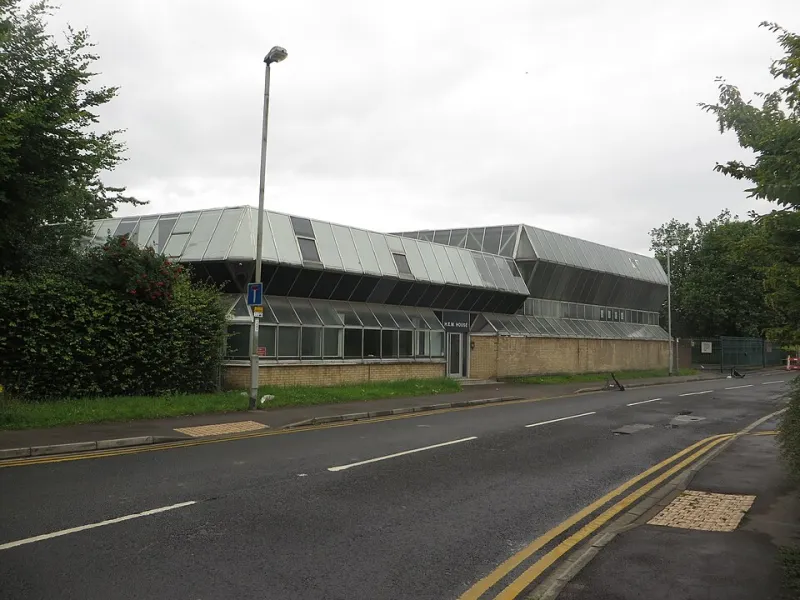
Photo: Dietmar Rabich, CC BY-SA 4.0, via Wikimedia Commons
Accessibility is rarely absent from an SME's premises. It is simply often undocumented. A ramp is installed, a door is widened, a colleague's desk is moved, and the matter is treated as a practical fix rather than a governance control. The difficulty arises when the board is asked to explain what it knew, what it decided and what it budgeted for. At that point, a collection of facilities emails is not a record.
The accessibility file is not a compliance certificate. It is a working board document that records the premises as they are, the barriers that have been identified, the adjustments that have been made or refused, and the remedial work that has been scheduled or funded. For UK SMEs, the file also provides a disciplined way to separate the landlord's obligations from the tenant's, particularly where the occupying company does not own the building.
Why the board should hold the file
Accessibility tends to sit between facilities, HR and legal. That makes it easy to assume someone else is managing it. In practice, the board is usually the only body with the authority to approve spending, set review frequency and require evidence from across those functions.
The legal framework is not the whole story, but it is the starting point. Under the Equality Act 2010, service providers and employers have duties that can include making reasonable adjustments. The precise duty depends on the organisation, the premises and the circumstances. The board does not need to resolve legal questions in every meeting, but it does need a defensible process for identifying barriers and responding to them.
A working file also supports continuity. When a facilities manager leaves, a lease is assigned or a property is sold, the accessibility record should not leave with them. It should be an asset of the company, reviewed on a fixed cycle and retained with the premises documents.
Start with a premises barrier audit
A barrier audit is a structured walk-through, not a box-ticking exercise. It should be carried out by someone with enough authority to record findings without softening them, and ideally with input from people who use the premises. The audit should cover the route from the public highway or car park to the entrance, the entrance itself, circulation within the building, WC provision, meeting rooms, workstations, signage and evacuation arrangements.
The record should be specific. 'Access is difficult' is not a finding. 'The rear entrance has a 20mm threshold, a door opening of 760mm and no level landing' is a finding that can be priced and remedied. Photographs, measurements and dates are more useful than narrative descriptions alone.
The audit should distinguish between barriers that affect visitors and customers, barriers that affect employees, and barriers that affect contractors or other building users. A rear service door that is acceptable for a delivery may be the main staff entrance in practice. The file should reflect how the building is actually used, not how the lease plan says it should be.
Separate landlord and tenant responsibilities
In leased premises, the first practical question is who controls the element in question. The landlord usually controls the structure, common parts, lifts and shared entrances. The tenant usually controls the internal layout, fit-out, furniture and working practices. Service charge provisions may fund some works and not others. Alterations may require landlord consent.
A simple responsibility matrix, held at the front of the file, is more useful than a long lease summary. For each barrier, record who controls the area, who would need to consent to a change, who would pay, and what notice or approval process applies. Where the answer is unclear, record the query and the date it was raised with the landlord or managing agent.
This matrix also helps the board avoid committing to works it cannot deliver. A tenant may decide to install a temporary ramp at its own cost, but it should know whether the lease permits it, whether it creates a trip hazard and whether the landlord will require reinstatement at the end of the term.
Record reasonable adjustments as decisions
Reasonable adjustments are often small and informal. A changed start time, a different desk, a quieter meeting room or a temporary change to duties may not require a capital project. But informal adjustments still need a record if the board is to show that requests were considered consistently.
A reasonable adjustment log should capture the request, the date, the person or role responsible for responding, the decision and the reason. It should also record whether the adjustment is temporary or permanent, and when it will be reviewed. The log does not need to contain sensitive medical detail. It should contain enough information to show that the request was handled, not just received.
Where an adjustment involves physical works, the log should link to the barrier audit and to the budget. Where a request is declined, the record should show the factors considered. That is not a legal opinion, but it is governance evidence.
Budget before the pressure arrives
The accessibility file should carry a rolling remedial budget. Some works will be urgent, some will be planned, and some will be dependent on landlord consent or a lease event. A single line in the annual facilities budget is rarely enough. A small schedule, reviewed at least annually, is more realistic.
The schedule should distinguish between revenue items, such as signage, temporary ramps and minor fixtures, and capital items, such as door widening, lift works or accessible WC refurbishment. It should also flag works that may be recoverable through the service charge, and works that may need to be reversed at lease end.
The board does not need to approve every item in advance. It does need to approve the schedule and the threshold at which a new item returns to the board. That prevents accessibility spending from becoming either invisible or unpredictable.
Link the file to lease events and incidents
The file should be reviewed before a lease renewal, break clause, assignment or dilapidations discussion. Accessibility works can affect the condition of the premises, the reinstatement obligation and the evidence available if a dispute arises. A tenant that has installed an accessible entrance should know whether it must remove it at lease end and what the landlord's position is.
The file should also be available after an incident or complaint. If a visitor reports that a meeting room was inaccessible, the board should be able to show the audit finding, the decision taken and the timescale for remedy. That is more credible than reconstructing the position from memory.
A short board routine
A workable routine is to review the accessibility file twice a year. The review should confirm that the barrier audit is current, that the adjustment log has been updated, that the responsibility matrix still reflects the lease, and that the remedial budget has been revisited. The board should minute the review and any decisions, even where the decision is to take no action.
Accessibility will never be reduced to a single document. Buildings change, people change and the use of space changes. But a board file turns a scattered set of fixes into a record that can be explained, funded and reviewed. That is the difference between responding to accessibility and governing it.